
Silent Valley National Park
Overview
Silent Valley: Kerala's Last Untouched Rainforest
Silent Valley National Park sits deep in the Nilgiri hills of Palakkad district, protecting one of the few remaining stretches of virgin tropical evergreen forest in India. The park exists today because a wave of public protest stopped a hydroelectric dam project on the Kunthipuzha River in the early 1980s. Entry is permit-only, and every visitor must be accompanied by a guide from the local Forest Department.
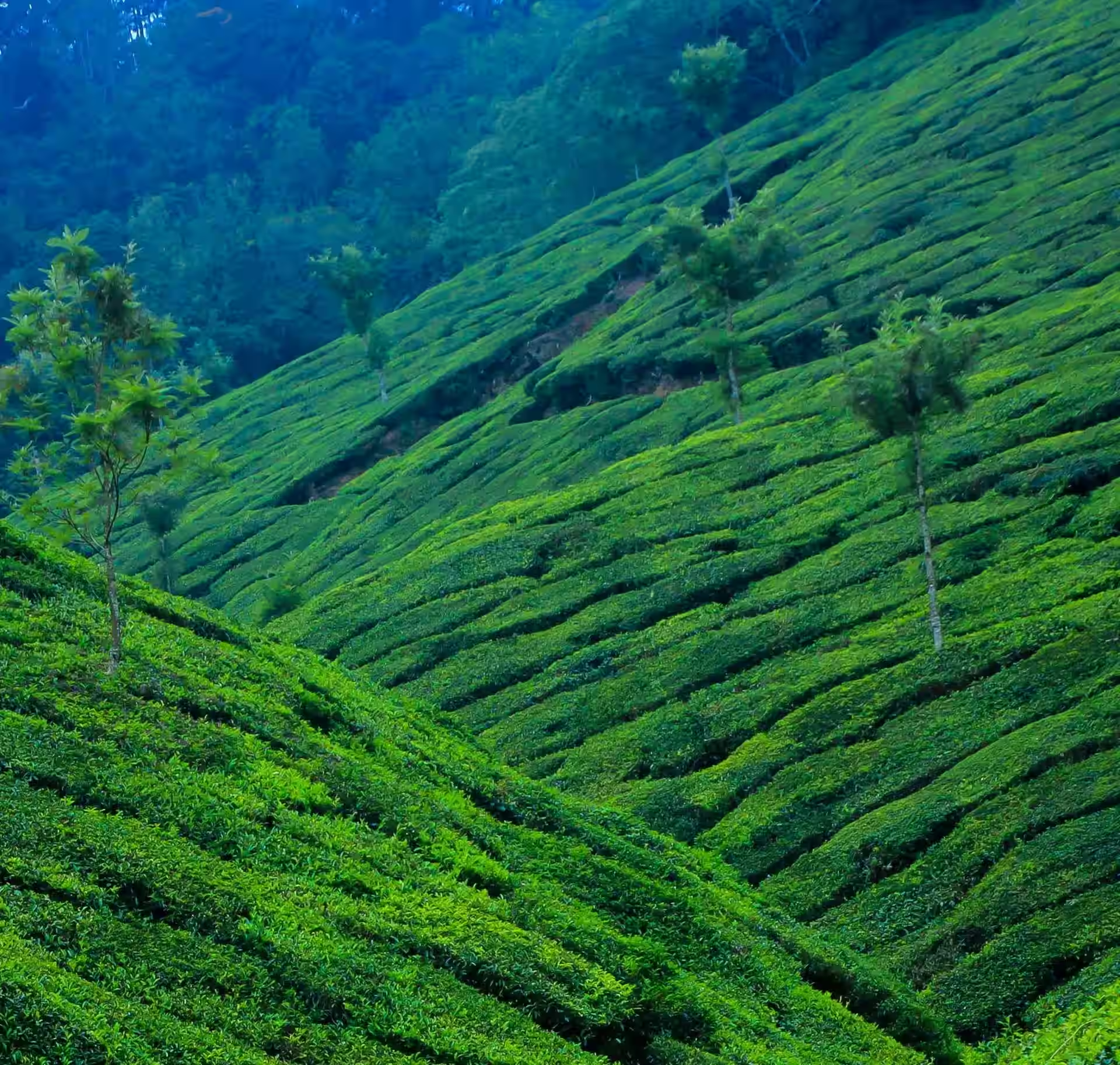
A typical visit takes about half a day, and the road from the gateway village of Mukkali runs through coffee plantations before reaching the forest edge. Sightings of the lion-tailed macaque and the Nilgiri langur are among the biggest draws, along with the sound of the Kunthipuzha River running through the valley.
Open Hours
Open Days: All days of the week
Opening Time: 8:00 AM
Closing Time: 1:00 PM
Visitors report to the Forest Department office at Mukkali to collect their permit and guide before heading into the park. The park also stays closed to tourists for a stretch between March and May each year, so it's worth checking availability before planning a trip in those months.
Entry Fee - Indians vs Foreigners
| Category | Ticket Price (INR) |
|---|---|
| Indian Citizens | ₹50 |
| Foreign Tourists | ₹500 |
| Students (Indian) | ₹35 |
| Senior Citizens (60+) | ₹25 |
About Silent Valley National Park
Silent Valley National Park lies in the northeast corner of Palakkad district, on the southwestern edge of the Nilgiri hills, about 40 kilometers northwest of Mannarkkad. The forest was marked as a Reserved Forest as early as 1888, but it was the movement to save it from a proposed hydroelectric dam in the late 1970s and early 1980s that brought it national attention. The government dropped the dam project, and the area was declared a national park in 1984, formally inaugurated the following year.
The park takes its name from the near-absence of cicadas in its forests, a quiet that struck early British visitors compared to the noisy jungles nearby. It forms the core of the Nilgiri Biosphere Reserve and is part of the Western Ghats UNESCO World Heritage cluster, recognized for sheltering one of the last undisturbed stretches of South Western Ghats rainforest in the country.
The Kunthipuzha River runs through the length of the valley before joining the Bharathapuzha, Kerala's second-longest river. Vehicles can travel only as far as Mukkali; from there, the road into the buffer zone leads to the watchtower and forest station at Sairandhri, beyond which the core zone is closed to general tourists and reserved for research and specially permitted treks.
Silent Valley holds an unusually rich botanical record, with more than 1,000 species of flowering plants and over 100 kinds of orchids recorded within its boundaries, some found nowhere else.
What To Expect
Permit-Only Entry
Visits to Silent Valley National Park follow Kerala Forest Department regulations, with entry and guided access arranged through designated booking procedures.
Kunthipuzha River
The Kunthipuzha River flows through the park's landscape and is an important part of the region's rich forest ecosystem.
Lion-Tailed Macaque
Silent Valley is an important habitat for the endangered lion-tailed macaque, along with Nilgiri langurs and Malabar giant squirrels.
Sairandhri Watchtower
Sairandhri is an important visitor point within the park area, offering views of the surrounding forest and valley landscape.
Birdwatching Along the Plantation Road
The roads and forest edges around Mukkali provide opportunities to spot hornbills, eagles, and other birds found in the Western Ghats.
Trekking in the Buffer Zone
Guided walks explore designated buffer-zone and forest-edge trails, while the sensitive core areas remain restricted for conservation.
How to Reach Silent Valley National Park
By Air
Coimbatore International Airport is the nearest airport, roughly 65–77 km away, with regular flights to major Indian cities. Cochin International Airport, about 160 km away, is the nearest international airport in Kerala.
By Rail
Palakkad Junction (Olavakkode) is the nearest railway station, about 50–65 km from the park. Shornur Junction, roughly 95–100 km away, is a useful alternative for those arriving via the Konkan Railway.
By Road
Silent Valley is reached via Mannarkkad, about 55 km from Palakkad town, followed by the road to Mukkali, the gateway village where permits are issued. From Coimbatore, the drive runs via Anaikatti and Agali, covering roughly 65–100 km depending on the route taken.
Frequently Asked Questions
Where is Silent Valley National Park located?
Silent Valley National Park is located in the Nilgiri hills of Palakkad district in Kerala, near the village of Mukkali, about 40 kilometers northwest of Mannarkkad.
What is Silent Valley National Park famous for?
It is famous for being one of India's last untouched tropical evergreen rainforests, home to the lion-tailed macaque, and for the 1970s-80s protest movement that saved it from a hydroelectric dam project.
What is the entry fee for Silent Valley National Park?
Indian citizens pay ₹50, foreign tourists pay ₹500, Indian students pay ₹35 with valid ID, and senior citizens above 60 pay ₹25.
Do I need a permit to visit Silent Valley?
Yes, entry is permit-only and booked in advance through the Kerala Forest Department. A guide is compulsory and is assigned at the forest office in Mukkali.
What is the best time to visit Silent Valley National Park?
October to February is generally considered the best period, with the park typically closed to tourists for part of the March-to-May stretch each year.
Similar Places to Visit
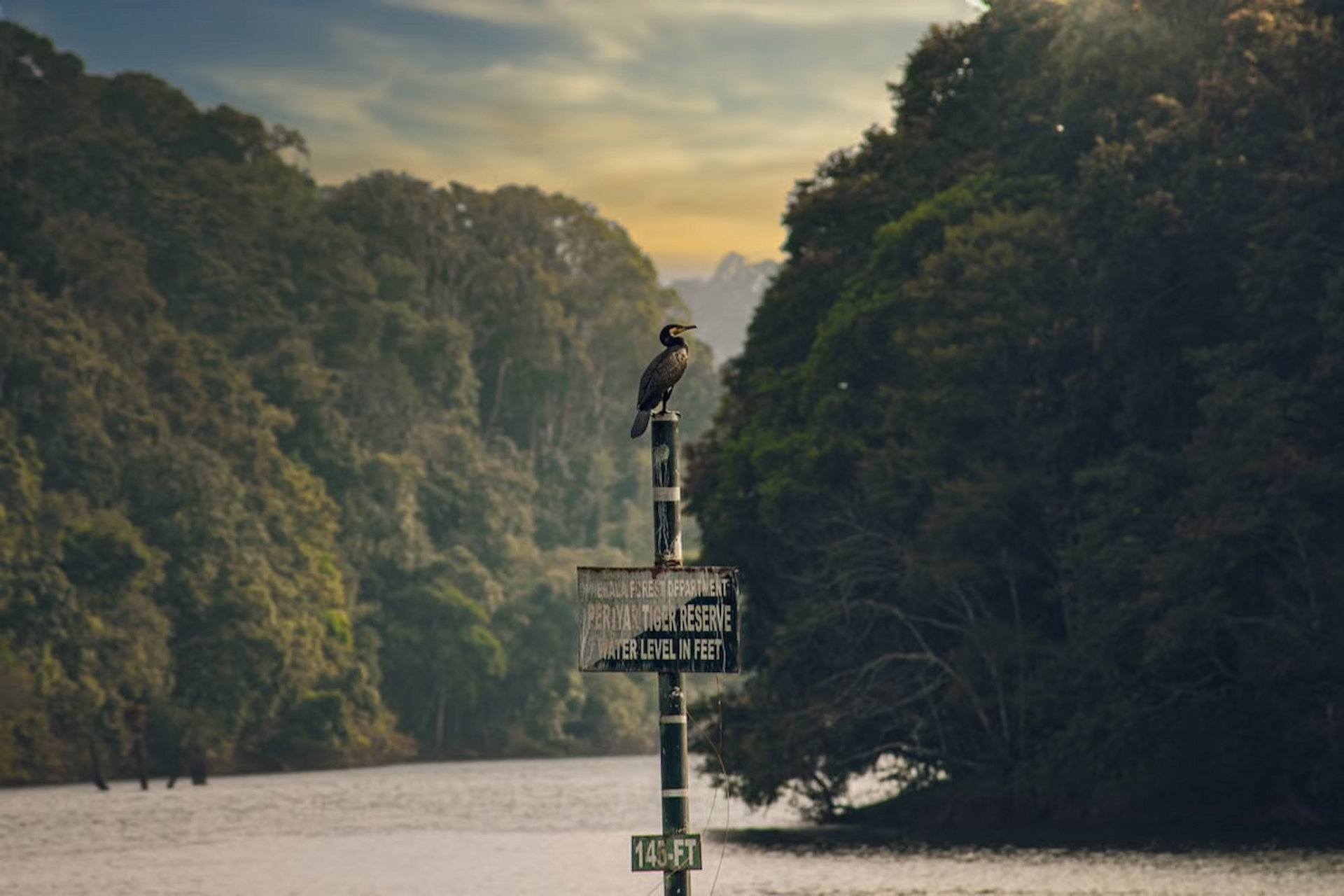
Periyar National Park
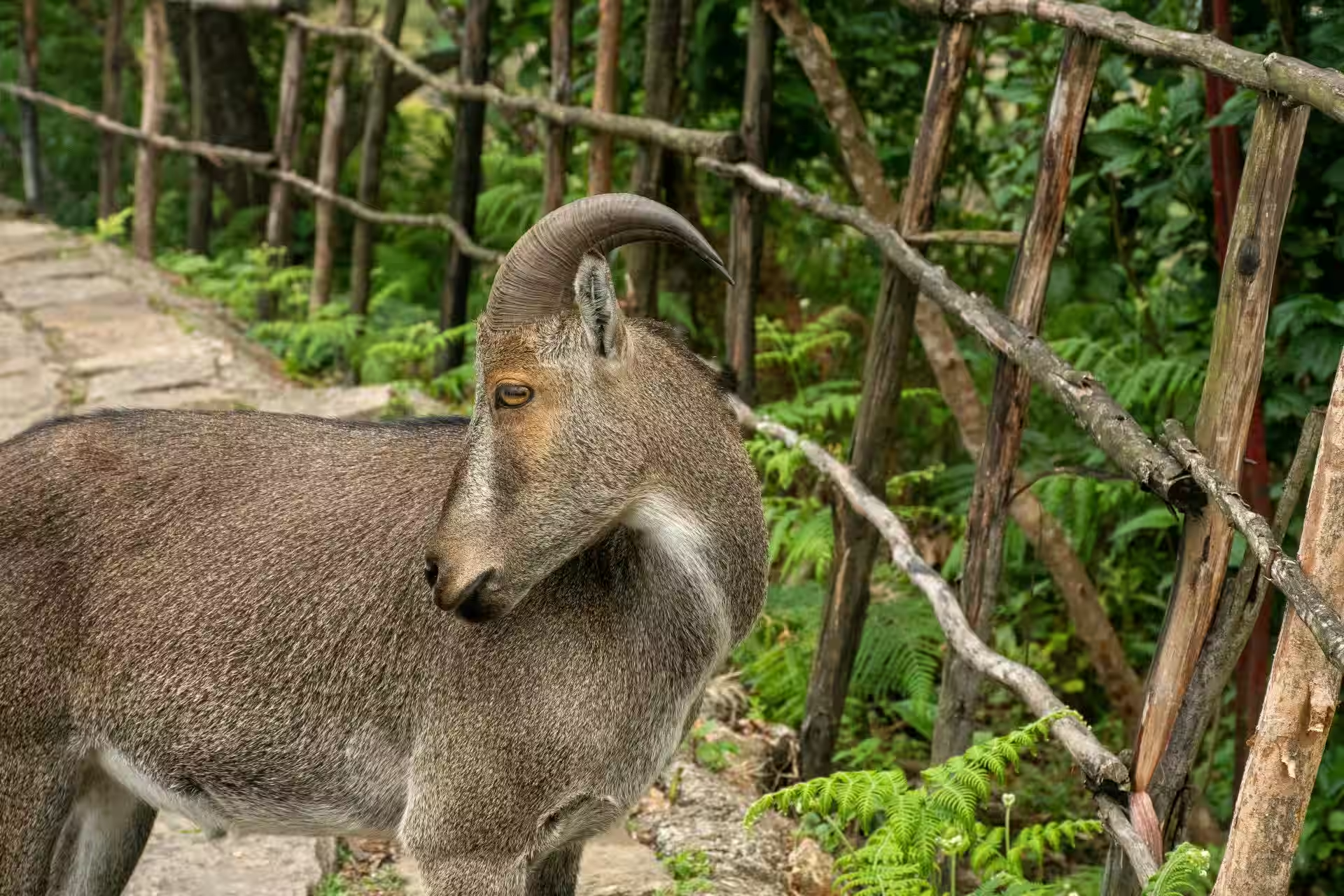
Eravikulam National Park
Wayanad Wildlife Sanctuary

Kumarakom Bird Sanctuary