Amer Fort
Overview
Amer Fort: A Living Piece of Rajasthan's Past
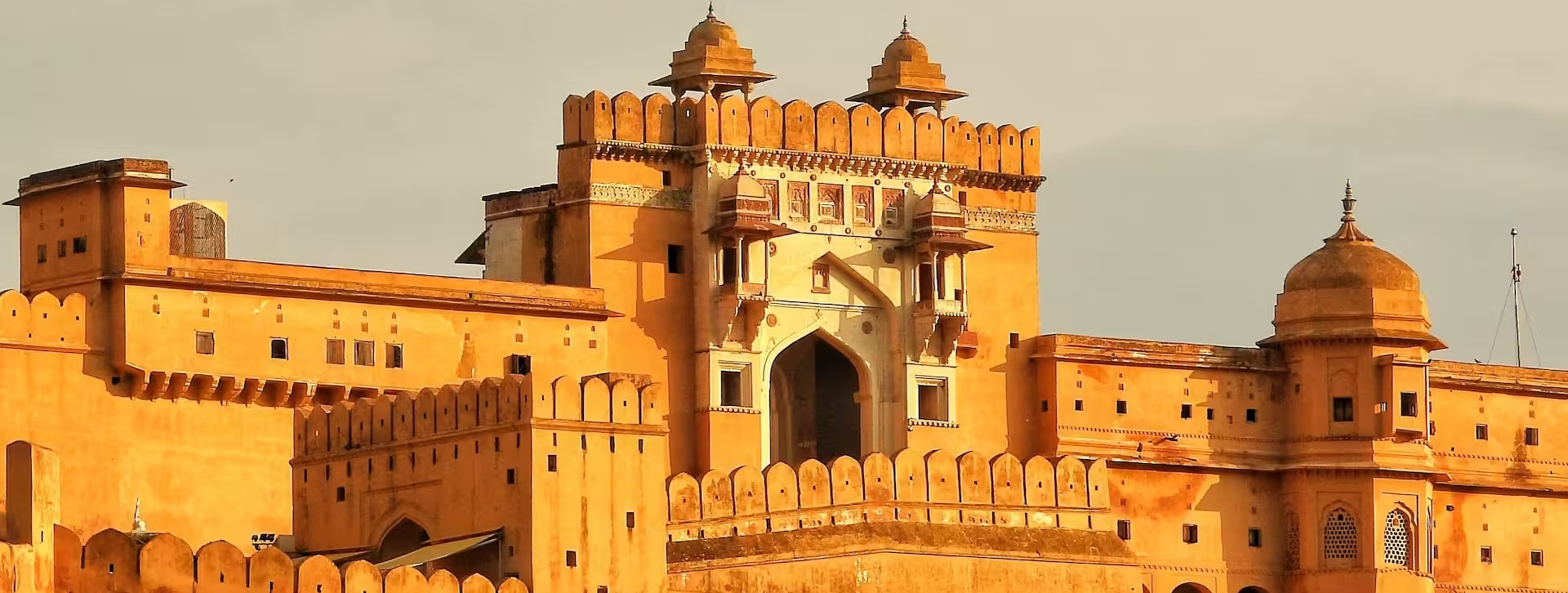
Amer Fort is one of the most visited sites near Jaipur, known for its hilltop setting and the view over Maota Lake below. Visitors reach the entrance by climbing the stone path, taking a jeep, or riding an elephant up. Inside, Sheesh Mahal draws the biggest crowds for its mirrored walls, while quieter courtyards and gardens offer a slower pace.
A typical visit takes 2 to 3 hours, and mornings are best to avoid crowds and heat. An evening light and sound show runs after regular hours for those who want to stay longer.
Open Hours
Open Days: All days of the week
Opening Time: 8:00 AM
Closing Time: 5:30 PM
Visitors can enter the palace complex and walk through all four courtyards, including Sheesh Mahal and Diwan-e-Aam. An evening light and sound show runs after closing, telling the story of the fort's builders and the battles they fought.
Entry Fee - Indians vs Foreigners
| Category | Ticket Price (INR) |
|---|---|
| Indian Citizens | ₹100 |
| Foreign Tourists | ₹500 |
| Students (Indian) | ₹10 |
About Amer Fort
Amer Fort, also spelled Amber Fort, is one of the most visited monuments in Rajasthan. It sits on a hilltop overlooking Maota Lake, roughly 11 kilometers from the center of Jaipur. The fort was built in 1592 by Raja Man Singh I, a general in Emperor Akbar's army, and later expanded by his successors over the next two centuries.
The fort was the seat of power for the Kachwaha Rajput rulers before the capital moved to Jaipur city in the 18th century. Its design mixes Hindu and Mughal styles, seen in the carved sandstone walls, marble inlays, and mirror work found throughout the complex.
The fort is built in four main sections, each centered on its own courtyard. The first courtyard was used for military parades. The second holds Diwan-e-Aam, the hall where the king met the public. The third courtyard leads to the private royal quarters, including Sheesh Mahal and Sukh Niwas. The fourth courtyard housed the royal family and their attendants.
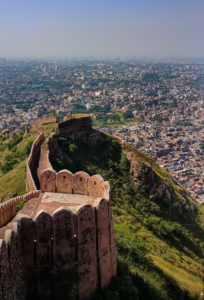
A long wall connects Amer Fort to the neighboring Jaigarh Fort on the hill above, built so the royal family could retreat there during an attack. Below the fort, Maota Lake once supplied water to the palace and still reflects its walls on calm days.
Amer Fort was named a UNESCO World Heritage Site in 2013, as part of a group of six hill forts in Rajasthan.
What To Expect
Large Fort Complex
Amer Fort has several gates, courtyards, halls, and palaces. The layout shows how royal life functioned during that time.
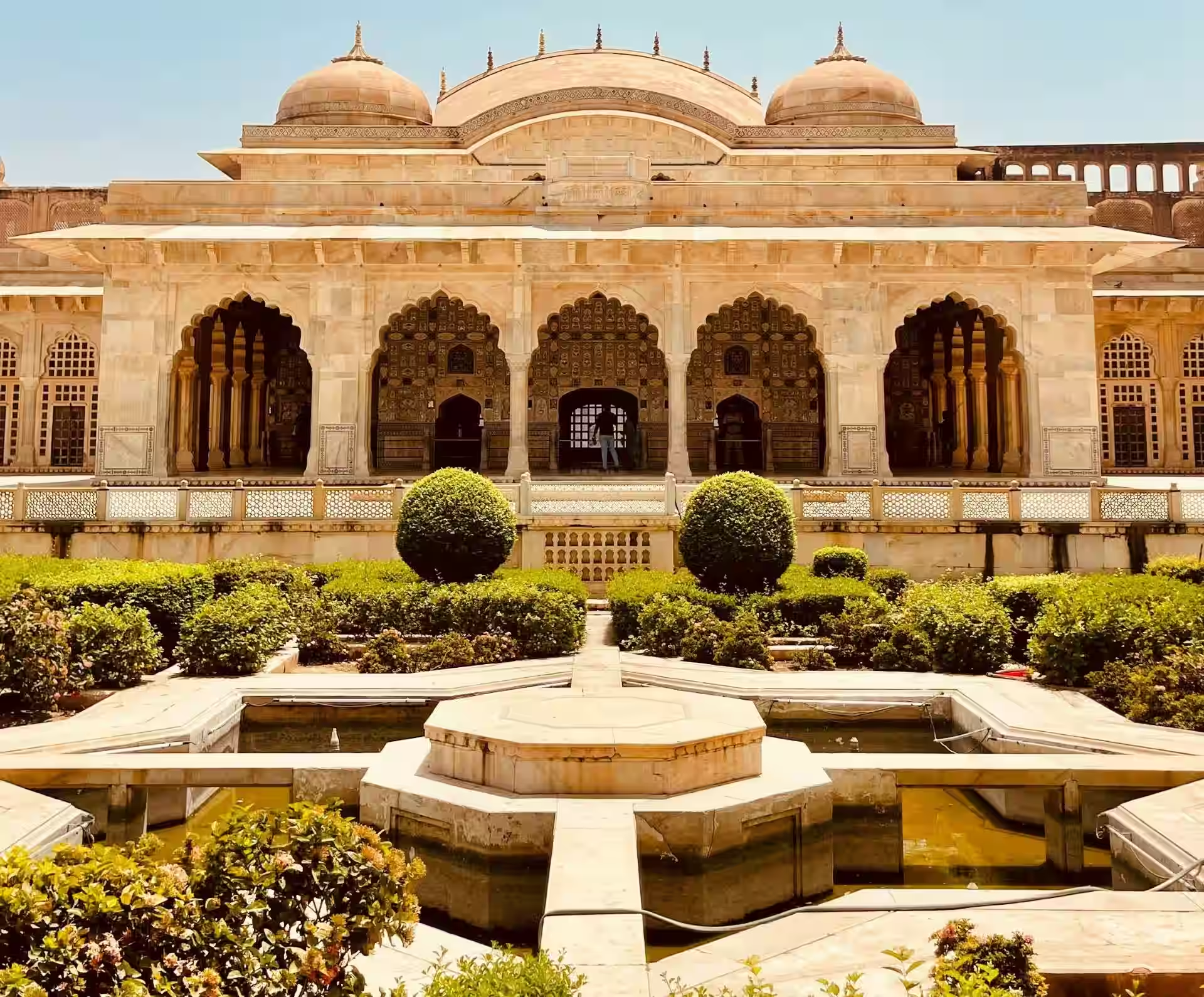
Sheesh Mahal
The Mirror Palace is one of the most famous parts of the fort. The walls and ceilings are covered with small mirror pieces that reflect light beautifully.
Diwan-e-Aam
This is the public audience hall, marked by 27 pillars carved with elephant designs. It was the place where the king met his subjects and heard their concerns.
Ganesh Pol
This is a decorative gateway that leads to the private palaces of the royal family. It is known for its colorful design.
View of Maota Lake
From the fort walls and terraces, visitors can see Maota Lake below. The view is especially nice in the morning.
Elephant Ride and Jeep Ride
Some visitors choose to ride elephants or jeeps to reach the fort entrance from the base of the hill.
How to Reach Amer Fort
By Air
Jaipur International Airport is about 23–25 km from Amer Fort. Taxis and app-based cabs are available, with the journey usually taking around 35–50 minutes depending on traffic.
By Rail
Jaipur Junction Railway Station is approximately 11–13 km from Amer Fort. Taxis and auto-rickshaws are readily available, with the journey taking around 25–35 minutes.
By Road
Amer Fort is well connected to central Jaipur by road and is easy to reach by private car or taxi. The journey usually takes around 30–40 minutes, depending on traffic.
Frequently Asked Questions
Where is Amer Fort located?
Amer Fort is located on a hill above Maota Lake, about 11 kilometers from Jaipur city in Rajasthan.
What is Amer Fort famous for?
It is famous for its blend of Rajput and Mughal architecture, especially Sheesh Mahal's mirror work, its large courtyards, and its role as the former seat of the Kachwaha Rajput rulers.
What is the entry fee for Amer Fort?
Indian citizens pay ₹100, foreign tourists pay ₹500, and Indian students pay ₹10 with valid ID.
Is photography allowed inside Amer Fort?
Yes, photography is allowed in most areas of the fort. Some sections, like certain parts of Sheesh Mahal, may have restrictions, so it's worth checking signage on site.
What is Sheesh Mahal in Amer Fort?
Sheesh Mahal, or the Mirror Palace, is a hall inside Amer Fort with walls and ceilings covered in small mirror pieces. Even a single candle flame reflects across the entire room, a design once used to light the space without windows.
Similar Places to Visit
Jaigarh Fort
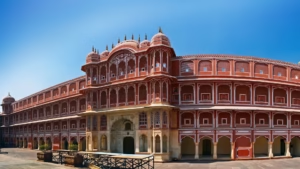
City Palace, Jaipur
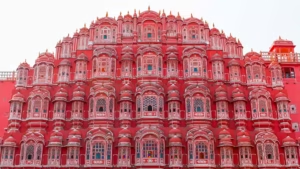
Hawa Mahal
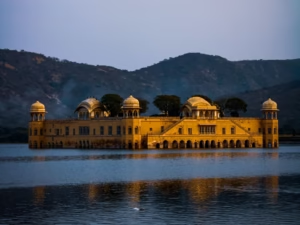
Jal Mahal